Coordinating Conjunctions
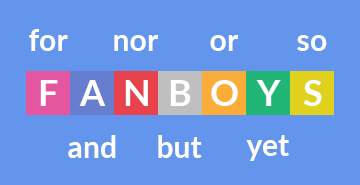
Coordinating conjunctions are words that join two equal parts of a sentence. They can connect: two words, two phrases, and two independent clauses (complete sentences). They make our speaking and writing smoother. Think of them as glue for your sentences. The seven coordinating conjunctions are: and, but, or, so, for, nor, and yet. A simple way to remember them is FANBOYS.
How to use
Use 'and' when you want to join similar ideas or add more information.
- I have a cat and a dog.
- She opened the window and sat down.
Use 'but' when the second idea is different from the first one to show contrast.
- He is young, but he is very responsible.
- The food was cheap, but it was delicious.
Use 'or' when there are two or more possibilities to give a choice.
- Would you like tea or coffee?
- We can leave now or wait for John.
Use 'so' when the second part is the result of the first part.
- It was late, so we went home.
- I was hungry, so I made a sandwich.
'Yet' is similar to 'but', but it often shows that something is surprising or unexpected to show an unpredictable contrast.
- The task was difficult, yet everyone finished it.
- She was fired, yet she kept working.
'For' means 'because', use it to explain or provide a reason or purpose for something.
- We stayed inside, for it was snowing.
- She was happy, for she had passed the exam.
Use 'nor' to add another negative statement. It often follows words like not, never, or neither.
- He doesn't like coffee, nor does he like tea.
- They were not ready, nor were they prepared.
When a coordinating conjunction joins two independent clauses (complete sentences), use a comma before the conjunction.
- I finished my homework, and I watched TV.
- It was raining, so we stayed indoors.
- I bought apples and oranges.
- He is kind but shy.