Past Simple
The Past Simple tense in English is used to talk about actions or states that started and finished at a specific time in the past. The time could be recent or distant, but the key is that the action is complete. This tense is often used when telling a story, describing past experiences or sharing facts about history.
In this guide, we'll explore what the Past Simple is, how to form it, when to use it, and common mistakes to avoid.
How to form
Forming the Past Simple depends on whether the verb is regular or irregular. This is the most crucial concept to understand.
- She worked hard yesterday.
- They participated in the pet show.
- I lived abroad for ten years.
Unfortunately, irregular verbs don't follow the '‑ed' rule. They have their own unique past forms that must be memorized.
- She went to the store this morning.
- He ate a big sandwich for lunch.
- We swam a lot while we were on holiday.
This verb doesn't follow the standard rules. It has two past forms: 'was' and 'were'. The form you use depends on the subject of the sentence.
- I/He/She/It + was → She was at home last night.
- You/We/They + were → They were excited about the pet show.
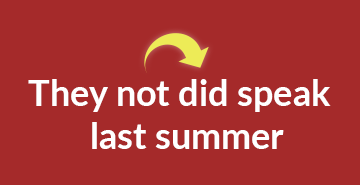
To form such sentences we use the auxiliary verb 'did' followed by 'not' and the base verb. You can also use contracted forms of negative sentences when the auxiliary verb 'did' is combined with 'not' and becomes – didn't.
- I did not (didn’t) walk to the park.
- She did not (didn't) eat the sandwich.
- He was not (wasn't) at the office.
- They were not (weren't) hungry.
To form a question, we also use the auxiliary verb 'did'. It comes before the subject.
- Did she work yesterday?
- Did they go to the market?
- Was he at the party?
- Were they in Belarus last December?
When to use
1. Completed actions – actions that happened and finished at a specific time in the past. The time is stated or implied.
- I watched a movie last night.
- She visited Paris in 2019.
- They played soccer yesterday.
2. States or facts – to state a historical fact or a fact that was true at a specific time in the past.
- The Second World War ended in 1945.
- She lived in London for five years.
- They were tired after the game.
3. Series of actions – to tell a story where actions happened one after another.
- I woke up, brushed my teeth, ate breakfast, and went to work.
- Once upon a time, a king ruled a big country. He fought many battles and won them all.