Past Simple or Past Continuous
Do you know when to say 'I walked' and when to say 'I was walking'? This is one of the most common questions for English learners. The choice between these two tenses depends on one simple idea: whether the action is a completed event or an ongoing background activity in the past? This guide explains the difference between the Past Simple and Past Continuous. Learn the rules, see easy examples, and never confuse these two tenses again.
How to use
- I watched a movie last night.
- He arrived at 8 o'clock.
- At 6 o'clock last night, I was watching a movie.
- They were sleeping all day.
- She found her keys and unlocked the car.
- I woke up, had breakfast, and left for work.
- The sun was shining and the birds were singing.
- People were talking while the music was playing.
Use the Past Continuous for the action that was already happening and the Past Simple for the shorter action that interrupted it.
- I was sleeping when the phone rang.
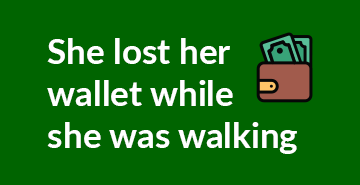
- She was walking home when it started to rain.
- We were having dinner when the lights went out.
Some verbs describe a state (how you feel, what you think, what you believe), not an action. These are called stative verbs. We do not usually use them in the Past Continuous. Common stative verbs: like, love, hate, want, need, know, understand, believe, prefer.
- I was knowing the answer. ❌ → I knew the answer. ☑️
- He was wanting a new car. ❌ → He wanted a new car. ☑️