Future simple
The Future Simple tense in English is one of the most common ways to talk about the future. This tense helps us describe actions or situations that will happen later, after the present moment. By mastering it, you can talk confidently about plans, predictions, and promises.
In this guide, we'll explore what the Future Simple is, how to form it, when to use it, and common mistakes to avoid.
How to form
Building the Future Simple is straightforward. All you need is to understand where to put the modal verb 'will' in the sentence. For affirmative sentences in spoken English and informal writing we can use the contraction and add 'll to subjects.
- I will (I'll) call you tomorrow.
- She will (She'll) finish the report tomorrow.
- We will (We'll) travel to Minsk next year.
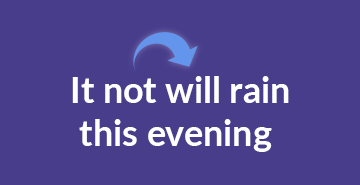
To make a negative sentence, simply add 'not' after 'will'. The contraction is – won't.
- I will not (won't) forget your birthday.
- He will not (won't) be late.
- We will not (won't) tell anyone your secret.
To ask a question, you just swap the subject and 'will'.
- Will you come to the party?
- Will it rain later?
- Will they win the game?
When to use
1. Plans or intentions – expressing a decision to do something in the future.
- We will visit Paris next year.
- Mark will call today. Don't worry.
- She'll study for the exam.
1. Instant decisions – making a decision at the moment of speaking, not planned in advance.
- It's hot in here. I think I'll open the window.
- The phone is ringing. I will answer it.
- I don't have time for the bus, so I will take the taxi.
2. Predictions – guessing what will happen, based on opinion or belief without proof, like weather or general ideas.
- I think it will rain tomorrow.
- I'm sure you'll enjoy this book!
- You will be a great doctor.
3. Promises – making a simple commitment to do something.
- He will call you after school.
- I will be careful, Mom.
- We’ll help you with your homework.
1. Polite requests or softening speech – using this can make a request or question sound softer and less direct.
- Will you please send me that email? (Softer than: Send me that email.)
- That will be all, thank you. (Softer and more formal than: That's all.)
- That will conclude our discussion for today. (More formal than: The discussion is over.)